



The New Luxury Has No Logo: Why Summer 2026 Belongs to Wearable Art
Wearable Art Fashion Is the New Luxury, and It Has No Logo to Prove It
Wearable art fashion is the idea that a piece of clothing or an accessory can carry the same intention, craftsmanship, and meaning as a work of art. It does not need a logo to tell you it is valuable. The value is visible in the print, the fabric, the considered design, and what the piece communicates about the person who chose it. This is the shift that has quietly been building in fashion since 2023, and by summer 2026 it has become impossible to ignore.
The old luxury said: look at my label. The new luxury says: look at what I chose and why.
This is not minimalism. It is not a rejection of beauty or colour or self-expression. It is, in fact, the opposite. The new luxury is more demanding than the old kind, because it requires actual taste. A logo requires nothing from you except the ability to spend money. Wearable art requires you to know what you like, to understand why you like it, and to choose accordingly. That is a different and more interesting kind of statement.
"A logo tells the room what something cost. A considered piece tells the room who you are. Only one of those is actually interesting."
Why Logo Luxury Lost Its Edge
The story of how loud, logo-driven luxury lost its cultural authority is worth understanding, because it explains exactly why the current moment in fashion feels so different.
For roughly two decades, the dominant luxury signalling system in fashion was the visible logo. A monogrammed bag, a branded belt, a label printed conspicuously across a garment: these communicated status clearly and efficiently. The message was: I can afford this brand. In an economic climate where brand recognition was the fastest shortcut to credibility, this system worked. But it was also inherently dependent on the logo retaining cultural cachet, and cultural cachet is not guaranteed.
By 2023, something had shifted. The television series Succession introduced a wider audience to the concept of "stealth wealth," the way genuinely wealthy people often choose pieces without visible branding precisely because they have no need to prove anything. The quiet luxury aesthetic followed quickly: premium fabrics, considered silhouettes, and a studied absence of logos. The idea that the most expensive room is the one with nothing to prove spread rapidly through fashion discourse.
But quiet luxury, for all its appeal, had a limitation. It was still fundamentally about restraint. It said: I have removed the logo. Wearable art fashion takes the conversation somewhere more interesting. It says: I have replaced the logo with something that actually means something.
Logo Luxury
Wearable Art
What Wearable Art Fashion Actually Means
Wearable art fashion refers to clothing, accessories, and textiles that are created with the intention and quality of a work of art rather than simply as functional fashion items. Each piece is typically produced in limited quantities or as a unique design, and the emphasis is on artistic intention, craft, and meaning rather than mass production and trend-chasing.
The distinction matters. Most fashion is produced to be worn. Wearable art is produced to be worn, seen, and considered. It invites the question: why this print? Why this colour? Why this form? And it has an answer. The maker made a choice with intention, and the wearer makes a choice with intention, and together those choices constitute something more interesting than simply getting dressed.
In the Indian context, this idea is not new at all. Indian textile traditions have long embodied the principles of wearable art. A hand-woven Banarasi silk with a floral zari motif is not simply fabric. It is the record of a craftsperson's skill, a cultural conversation across generations, and a physical object made with a level of care that mass-produced cloth simply cannot replicate. What has changed in 2026 is that consumers are articulating this value more clearly and looking for it more deliberately across all price points, not just at the highest end.
What makes a piece wearable art? It is created with artistic intention rather than purely commercial function. The design carries a point of view. The materials are chosen for their quality and meaning, not just their cost. It is produced in limited quantities or as a unique design. And the person who wears it does so because of what the piece communicates, not because of whose name is on the label.
Three Principles That Separate Wearable Art from Fashion
Wearable art fashion is not just a mood or an aesthetic. It is defined by specific characteristics that separate it from ordinary fashion, even high-quality ordinary fashion. These three principles are worth knowing before you shop, because they help you identify pieces that will carry genuine meaning rather than simply looking good for a season.
The Design Has a Point of View
A piece of wearable art makes a specific choice and commits to it. The print has a reason. The colour tells a story. The form reflects a considered aesthetic rather than following what happens to be selling this season. When you look at a piece of wearable art, you can sense the intention behind it, even if you cannot articulate it. Compare that to a generic print that exists simply because prints are popular this summer.
The Materials Are Chosen With Integrity
Wearable art fashion treats material choice as part of the artistic statement. A vegan leather bag made from plant-based materials communicates a specific value system, just as a hand-woven silk scarf communicates respect for craft tradition. The material is not incidental to the piece. It is part of what makes the piece say what it says. Ethical sourcing, quality production, and considered material selection are not just ethical choices. They are artistic ones.
It Is Worn Deliberately
The wearable art fashion movement is as much about the wearer as the maker. A piece of wearable art worn without consideration is just clothing. The same piece chosen deliberately, because of what it communicates and how it aligns with who you are, becomes something else. The act of choosing is part of the statement. This is why the shift away from logo luxury is ultimately about people reclaiming agency over their own self-expression rather than delegating it to a brand.
Why Summer 2026 Is the Season Wearable Art Fashion Arrives
Several things are happening simultaneously in summer 2026 that make this the season for wearable art fashion to arrive in full.
The first is a consumer shift that has been building since the pandemic. People came out of extended isolation with a clarified sense of what they actually valued, and a heightened scepticism of things that were expensive without being meaningful. This translated into the quiet luxury movement of 2023 and 2024, but quiet luxury's answer to the logo problem was essentially: remove the logo and wear neutral colours. Wearable art fashion offers a richer answer.
The second is the Indian fashion context specifically. Urban Indian women in 2026 are increasingly sophisticated fashion consumers. The data on ethical fashion is telling: over 60% of Indian millennials are willing to pay more for sustainable fashion, according to industry research. The appetite for pieces that carry genuine craft and meaning is growing faster in India than almost anywhere else. This connects directly to a cultural heritage in which textiles have always been far more than functional, but this consumer is now applying those values to contemporary design.
The third is the scarf specifically. Printed scarves and stoles are having a significant moment in 2026 for a reason that goes beyond trend. They are the format in which wearable art is most accessible. A printed satin scarf at Rs. 650 to Rs. 1,650 is a piece that carries a designed print, demonstrates craft, and allows its wearer to make a considered aesthetic statement without any logo. It is wearable art at the most democratic price point, and that is a genuinely powerful thing.
"The Indian textile tradition has always known that a piece of cloth can carry meaning, memory, and artistry all at once. Summer 2026 is when the rest of the fashion world is catching up."
The Renata Tote: A Bag That Proves Luxury Does Not Need a Logo
Vegan leather. Clean design. No branding to hide behind. Just a very good bag
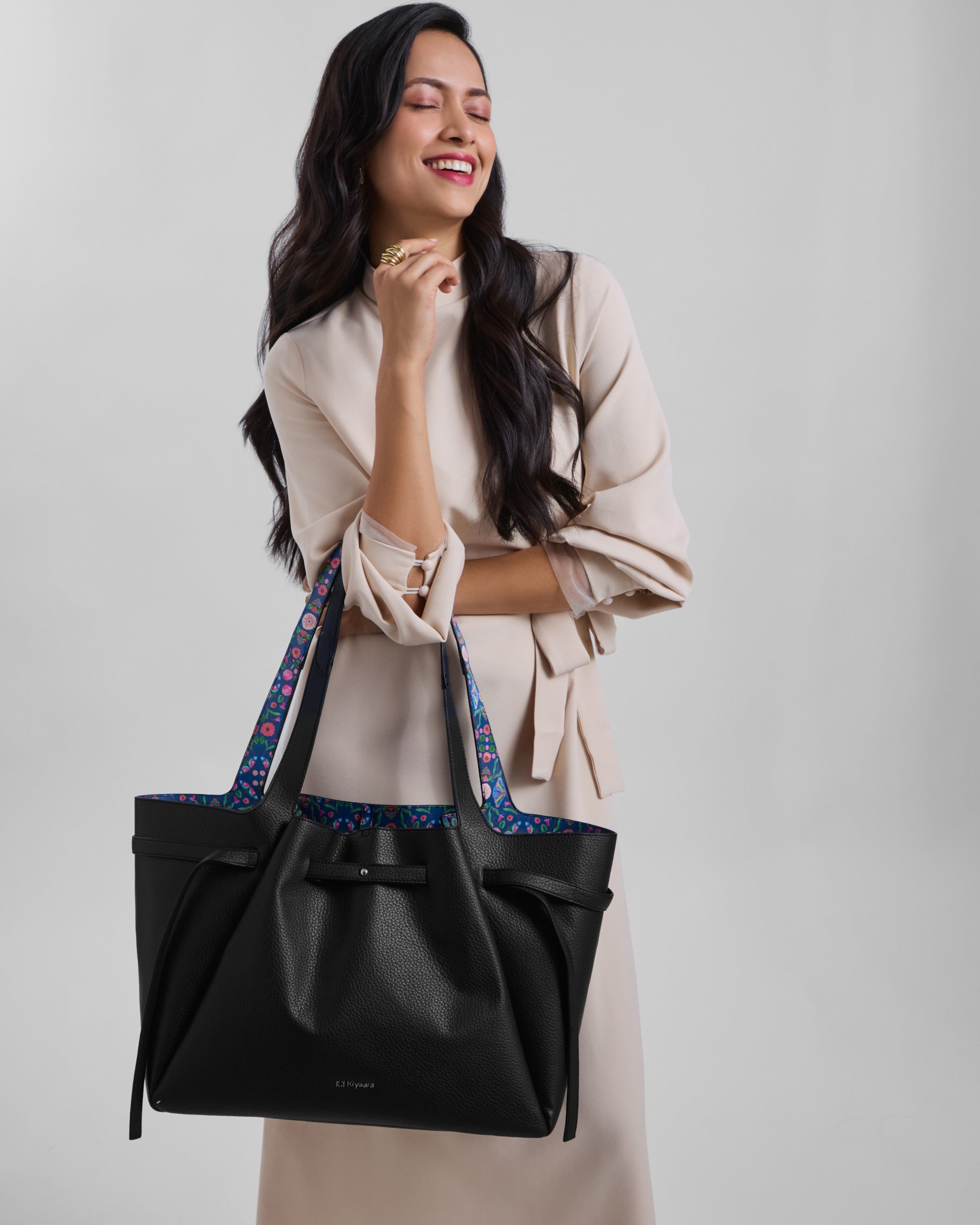
The Renata Tote is what no-logo luxury looks like when it is done well. A structured vegan leather tote made without a single animal product, with a clean silhouette that has no need for visible branding because the quality of the design speaks clearly enough on its own.
This is the principle of wearable art fashion applied to a bag. The material choice is the statement: vegan leather communicates a specific value system about the world you want to live in. The form is the statement: structured, considered, made to last well beyond whatever is trending this season. You will find it in our tote bags collection in both black and tan, starting at Rs. 5,990. It will carry your life and communicate your values simultaneously, which is exactly what a piece of wearable art should do.
No logo required.
The Meadow Stole Forest Green: A Print That Functions as a Work of Art
A designed print on lightweight satin. Chosen deliberately. Worn with intention
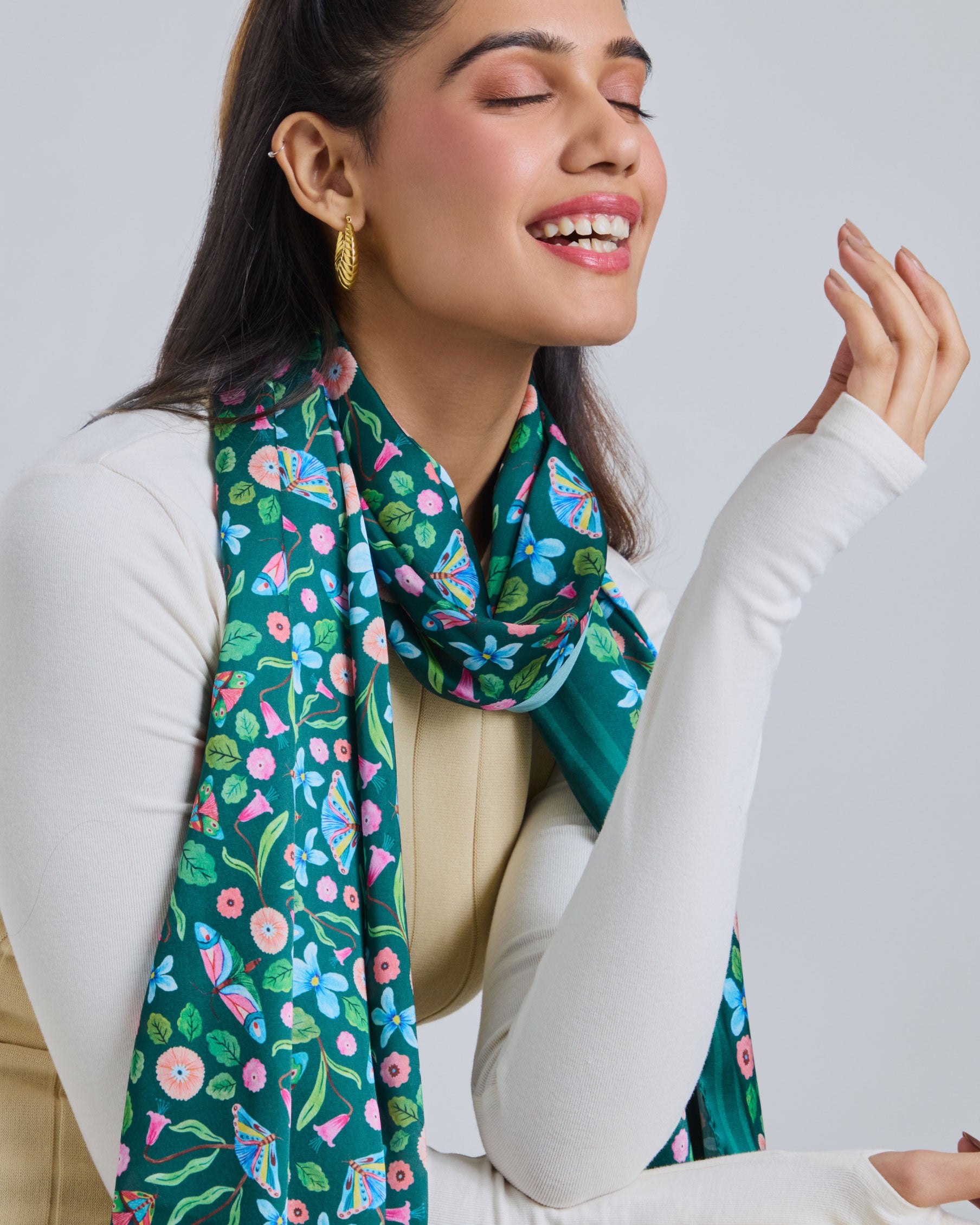
The Meadow Stole Forest Green is not just a scarf. It is a designed object. The meadow print was chosen for a specific reason, because a wildflower field communicates something particular about abundance, ease, and a connection to nature that a geometric or plain fabric simply cannot. Forest green carries its own associations in Indian cultural tradition: growth, fertility, vitality.
Together, they create a piece that says something specific before you have spoken a word. This is what wearable art fashion looks like at the accessory level: a lightweight satin stole at Rs. 1,650 that drapes across the shoulders of a solid kurta and immediately changes the entire conversation of the outfit. You can read more about the symbolic language in our guide to what florals really mean in fashion. Style it in eight different ways with our scarf styling guide.
This is the piece. Wear it knowing what it means.
No Logo Required. Just a Very Good Piece.
Browse the House of Kiyaara collection and find the bag, the scarf, or the wallet that communicates who you are rather than what you spent.
Shop Bags Shop Scarves Shop Bestsellers